
Opening Our Doors: How We Design Mission-Critical Systems
World Health Organization • Global Health Learning Platform
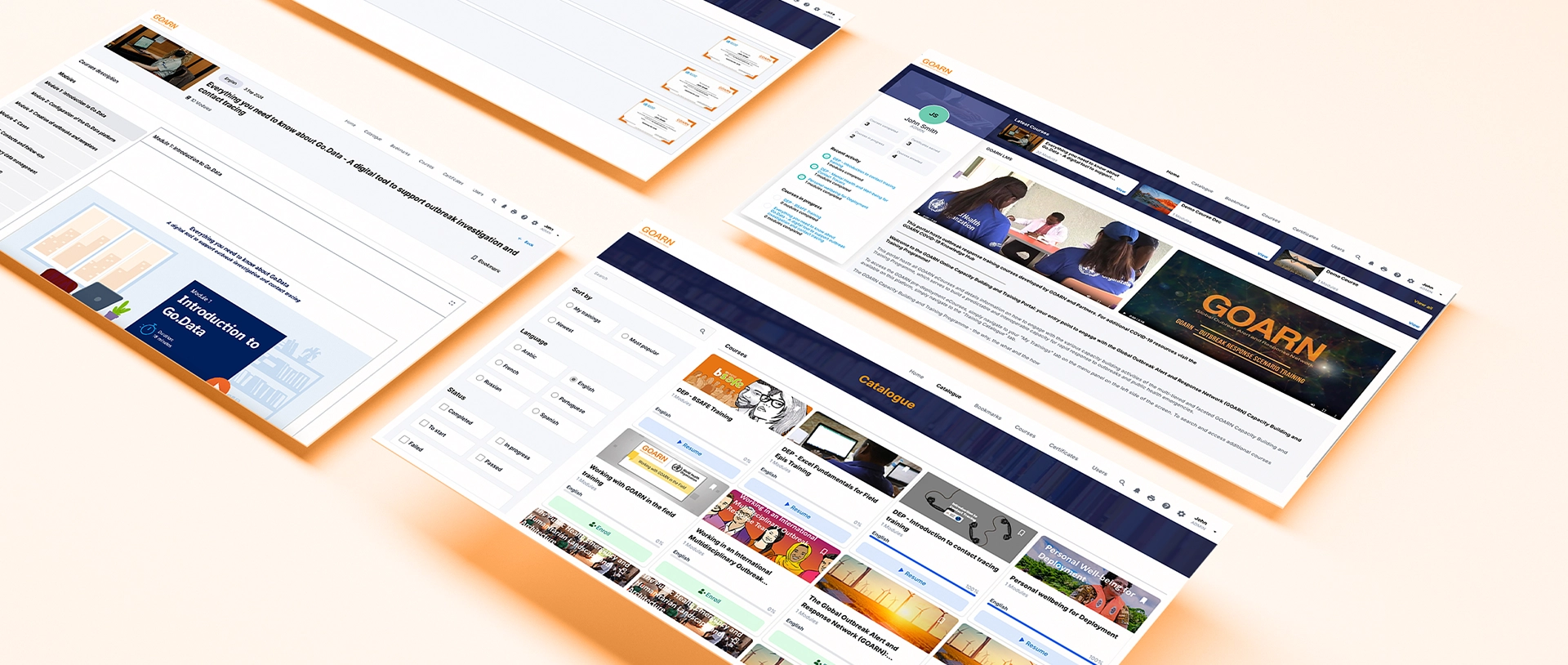 WHO Learning Platform Interface
In early 2024, the World Health Organization's learning platform was reaching end-of-life. The older system had grown difficult to maintain, didn't connect cleanly to WHO's other tools, and was weeks away from losing security support.
This platform was part of daily operations. If it went down, training pipelines for emergencies, disease surveillance, and field operations would stall. Health workers relied on it.
We needed a platform that reflected how training really happened across a global organisation—and we needed it soon, without disrupting existing programmes. The question was straightforward, but the stakes were not:
How do you build a reliable, flexible, global training system under real pressure and real deadlines?
The Challenge
The old system had features, but most of them worked against the grain of real workflows. Training at WHO doesn't happen in one format. It spans online courses, in-person workshops, and external certifications. The system had to support all of it.
But the interface made even simple actions harder than they needed to be. Confusing UX leads to inconsistent data—missed fields, mismatched categories, and improvised workarounds that later have to be untangled. The result was an ever-growing gap between how the platform worked and how people actually needed it to work.
Integrations were also manual, which meant training data moved slowly and sometimes inaccurately into WHO's operational systems. And with security support ending in a matter of weeks, the usual luxury of long discovery cycles was off the table. We needed clarity, alignment, and a path forward—fast.
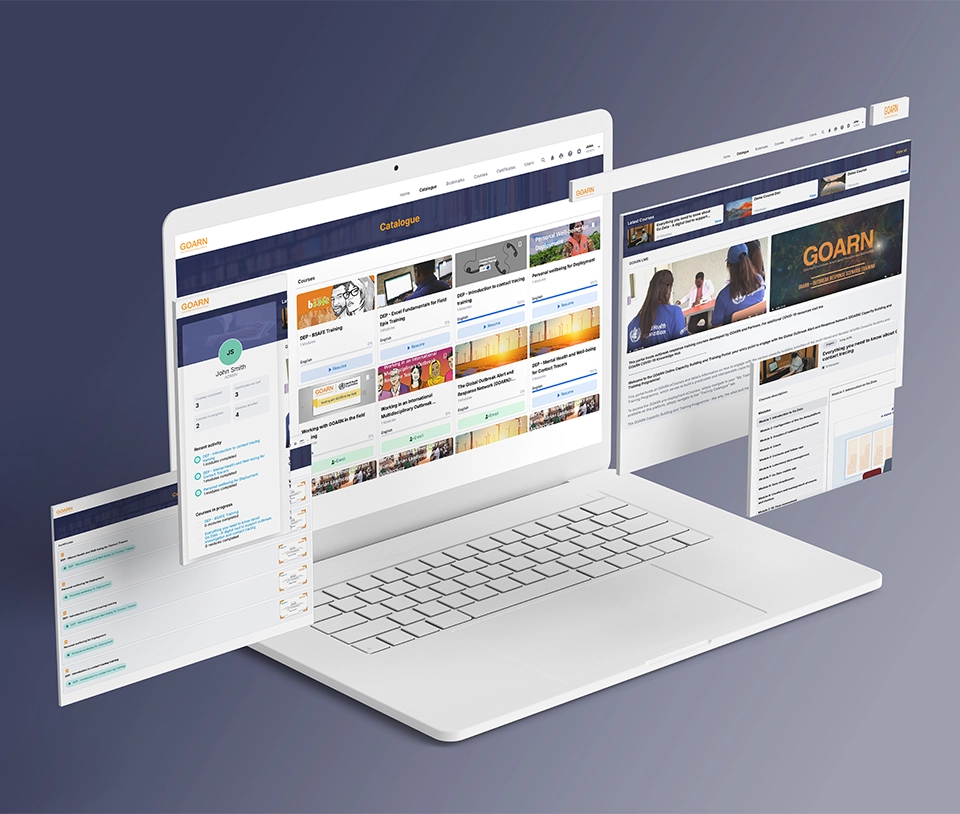 Learning Platform Interface
The Workshop
We started with a workshop. Not to check a box, but because documents alone rarely reveal the truth. Requirements tell you what people want. Workshops show you what people do. And what people do is what the system needs to support.
So we opened with a question:
"If this platform succeeds—what does success actually look like?"
Not in terms of features, but outcomes. This reset the conversation. Before talking about constraints or budgets, everyone aligned on the purpose: a platform that people could rely on, even in high-pressure scenarios.
From there, we mapped personas across the entire ecosystem—learners, administrators, content creators. On paper, some of their behaviours looked like edge cases, but in practice, they happened daily. Real operations don't fit cleanly into textbook workflows, and the platform had to reflect that reality.
Four priorities emerged:
Flexibility over feature volume
The previous platform had many features but few paths for adapting to new or unexpected training requirements.
Support for irregular workflows
Whether training was online, in-person, hybrid, or external, the system needed to capture and record it consistently.
Clarity and ease of use
A clean interface wasn't cosmetic—it was the foundation for trustworthy data and smoother operations.
Integrated from day one
Training data had to move automatically into WHO's systems, not through error-prone manual steps.
By the end of the workshop, everyone shared not just an understanding—but a common mental model. Decisions moved faster. Trade-offs became clearer. And for a project with immovable deadlines, that alignment was essential.
The Solution
The workshop turned assumptions into something clear and buildable. Once we understood how training actually happened across WHO, the design work stopped being theoretical. Rather than imagining workflows, we were responding to them.
Everything flowed from this grounding. Once the team shared that context, complexity stopped being abstract. It became a set of concrete design decisions.
A good example of this clarity in action was the SCORM player. Historically, this component took months of engineering and large teams. Here, it took five days. This is not because we cut corners, but because we finally had an unambiguous definition of what it needed to do and what it didn't. The scope was sharp and the logic was simple. Every requirement was tied directly to a need described in the workshop.
"In my early career, we built a SCORM player with a 35-person team over most of a year. This time it took about five days."
The Results
The platform launched smoothly, without disrupting training already in progress—one of the project's core constraints.
It now supports training operations, handling irregular workflows and integration needs with far greater clarity and reliability than before.
The interface is intuitive enough that new users can onboard themselves without lengthy manuals.
Most importantly, the platform reflects how people actually work. It is simple where it should be simple, flexible where it must be flexible, and stable across the scenarios where stability matters most.
The workshop didn't just help—it made this possible.
Alignment replaced guesswork and constraints became design inputs. The result was a system built with intention.
What We Learnt
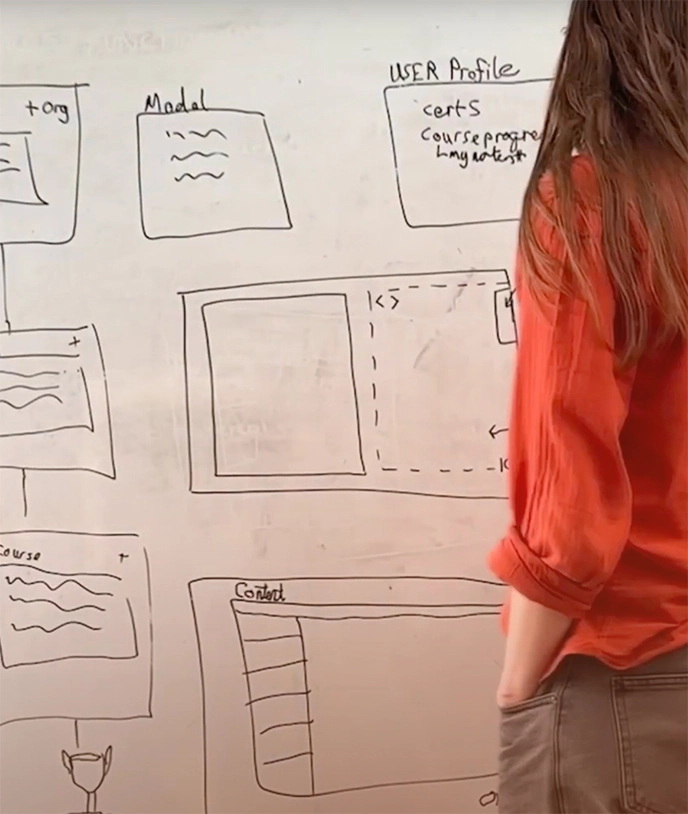 Workshop Whiteboard Session
Workshops aren't about alignment—they're about shared intuition
By the end of the workshop, everyone understood not just what we were building, but why the decisions mattered. That shared intuition meant fewer assumptions, faster iteration, and clearer priorities.
Constraints are accelerators when everyone can see them
Having a firm security deadline sounded risky, but it made decisions easier. Once the team agreed on what absolutely had to ship, the noise fell away. Constraints became a design tool, not a blocker.
Designing for real behaviour beats designing for imagined workflows
When stakeholders described their messy, real-world scenarios—the late-night course uploads, the cross-region approvals, the paper attendance sheets—that's when the right solutions emerged. Actual stories beat abstract requirements every time.
Simplicity isn't minimalism—it's operational clarity
A simpler interface didn't just look better. It reduced errors, improved data quality, and made training flow more smoothly across regions. Clarity is not a visual choice; it's an operational advantage.
Integration has to be first-class
Every system WHO relies on is part of a larger ecosystem. Treating integrations as core functionality (not a phase two add-on) removed friction and made the platform genuinely useful from day one.
Build for flexibility, not feature sets
The work WHO does changes rapidly. A rigid LMS would age quickly. By thinking in terms of adaptable building blocks rather than long feature lists, we created a system that can evolve without major rewrites.
The right people in a room can outperform sheer team size
The SCORM player is the perfect example—five focused days with the right clarity beat a 35-person, year-long effort from years ago. Alignment scales better than headcount.
Across the board, the biggest lesson was simple: If you understand the work deeply, the system almost designs itself.
Ready to Build Something Useful?
If you need a system built under real constraints, with clarity and shared understanding from the start, we can help.