

○
It can be a scary world when you need to create a mobile app, and you are not sure how much it should cost or which of the many ways people suggest is the best solution...
I would like to start by saying although this sounds like “how long is a piece of string” it is possible to answer this question.
If you Google this question you are likely to see the following answer from 2015
- Big mobile app agencies will charge $500k - $1m (and are not interested in smaller projects)
- Medium app development agencies $150k - $500k
- Small app developers will take on projects between $50k - $150k
The problem with that answer is that it is out of date. It predates the widespread uptake of the new Apple Developer Language Swift https://developer.apple.com/swift/ or the far superior Hybrid framework React-Native https://www.reactnative.com/ , not to mention the host of rapidly improving hybrid code once deploy on iPhone and Android frameworks
- Cordova https://cordova.apache.org/
- Xamarin https://github.com/xamarin
- Flutter https://flutter.io/
- Ionic https://ionicframework.com/
- NativeScript https://www.nativescript.org/
- Framework 7 https://framework7.io/
- Titanium Appcelerator https://www.appcelerator.com/
and many more.
So the world has moved on a lot since 2015, in simple terms does that mean everything is cheaper ….. maybe. It is probably more accurate to say that you get a lot more for your money.
If anything developer day rates are higher than they were in 2015 with $650 per day being the low end, but you can easily get 5x as much work done in each developer day. So let’s look why that is
In the Native world, Apple replaced the cumbersome Objective C with Swift, which runs faster, is easier to learn and cleans up memory after itself.
There are a plethora of free open source building blocks to choose from on Github now, including countless examples and sample pieces of code in pretty much all of the popular frameworks. Most of these are MIT licensed, which means you can use them as you need, so long as you do not try and claim you own the code.
If you want one hybrid code base for both iOS and Android, then React-Native based on the ReactJS open source framework donated by Facebook, is blazingly fast to code and uses Native Animations and cross code compilation into the respective platforms. For now it is the most popular.
One to watch is Google's new platform Flutter.io which offers even better performance than React-Native, but at the time of writing has still not had its first official release version.

A key question is what type of app do you want. If you want a game platform like Fortnite

then the chances are that your costs have not reduced much, since you will need pure native code bases for Android (Java) and iPhone (Swift / Objective C), and the cost of developers as we said has gone up.
On the other hand if you have a content distribution and / or data collection app, perhaps something more akin to a shopping cart, brochure, survey, annual report or parenting guide with interactive counselling then you are in luck.
For our content led interactive apps, many of these apps have very similar functionality to a web platform. There are some obvious advantages in having a mobile app, such as offline functionality, ease of access and integration with the native sharing functions. Three years ago if it cost $25k to create web based a SAAS platform it would cost $100k to deliver the same concept to mobile, now it is closer to $55k for a better quality solution.
A rough breakdown for 2015 is as follows
$25k because you still need to create the SAAS backend
$15k for the micro-services and additional auth to support the native clients
$30k for iOS
$30k for Android
However now the maths for 2018 looks more like this, if for example we use React-Native as the codebase$25k because you still need to create the SAAS backend
$5k for the micro-services and additional auth to support the native clients (since most platforms have headless capability as standard now)
$25k for iOS and Android implementations (using React-Native)

Yaay so everything half price, well not quite because new phones and operating systems are released on a regular basis. The cost of maintaining your app is likely to be less than half what it was, but it is not free so don't forget to factor ongoing costs in.
Finally if you feel that your app really is close to something you could deploy with a CMS (content management system) then you might want to consider a solution such as Reactions Studio https://thehub.ai/reactions which connects your CMS to your mobile app
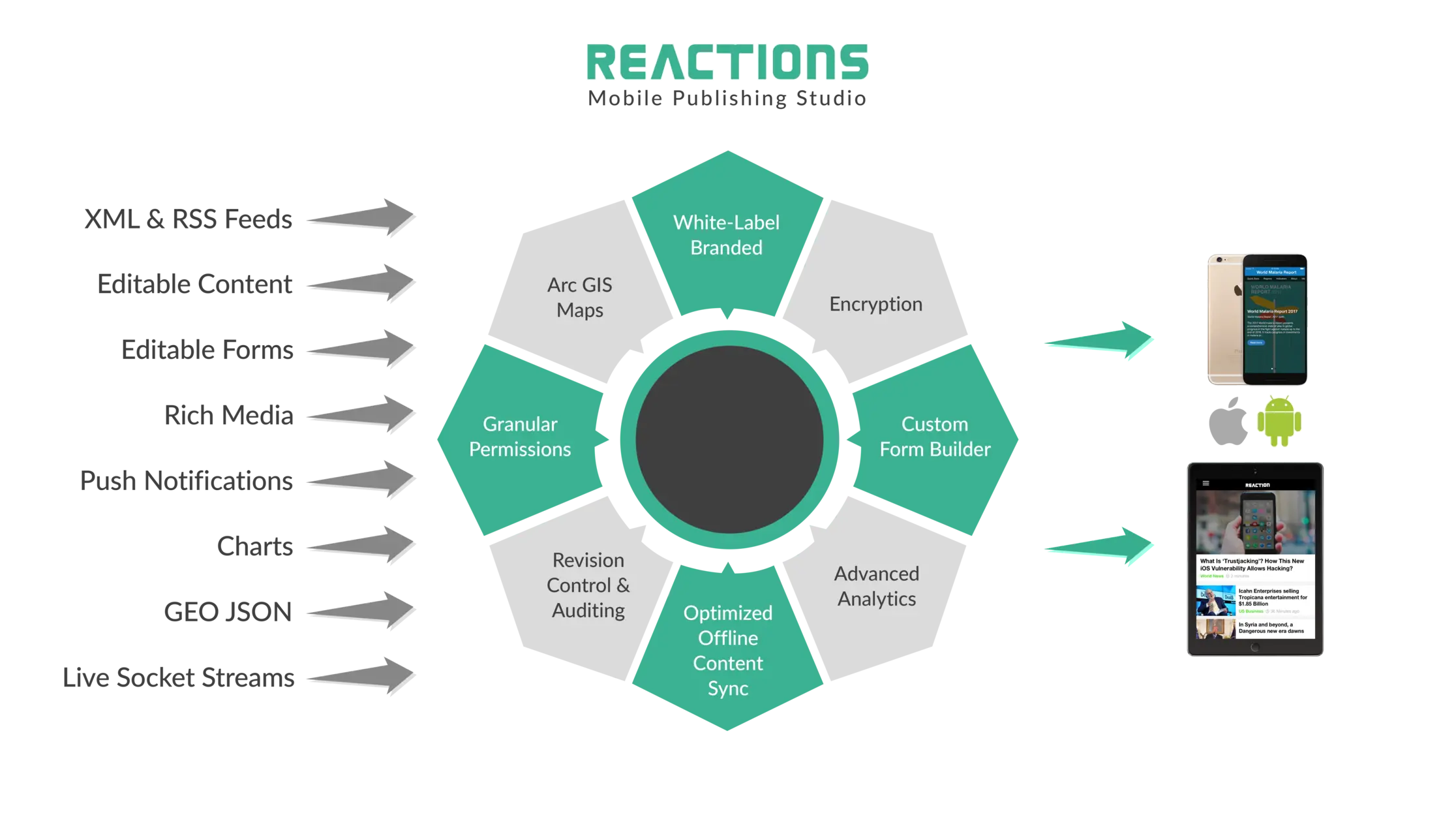
A studio like this gives you access to a content management system much like a modern day website backend. The content updates are encrypted and delivered to your Android and iPhone apps wirelessly and cached for offline use. Platforms like this typically cost circa $2k per month and will include all of your ongoing maintenance, but may not be suitable if you rely on a lot of custom logic and advanced graphical functionality.
So in summary apps cost about half what they used to cost in 2015 or about twice what you might pay for the pure SAAS / web equivalent. Pick your technology carefully and focus on your server side decisions if you want a more flexible app as time and technology move on.
Pick your developers carefully too, the world is littered with failed apps created by dated monolithic agencies. Find a group of developers who are passionate about what they do and have experience with the next generation frameworks!